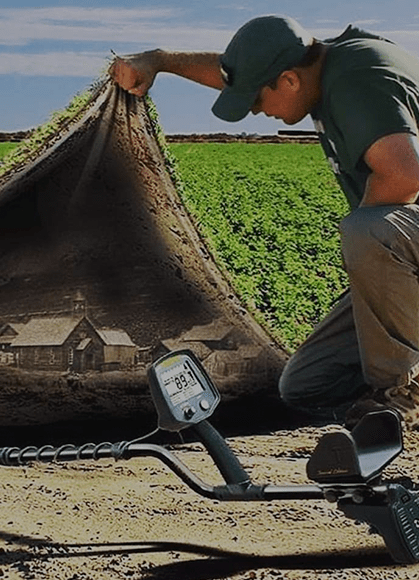
If you are out metal detecting all day, then you need a lightweight spade, that’s strong enough for the condition you are digging in, with the right size blade…
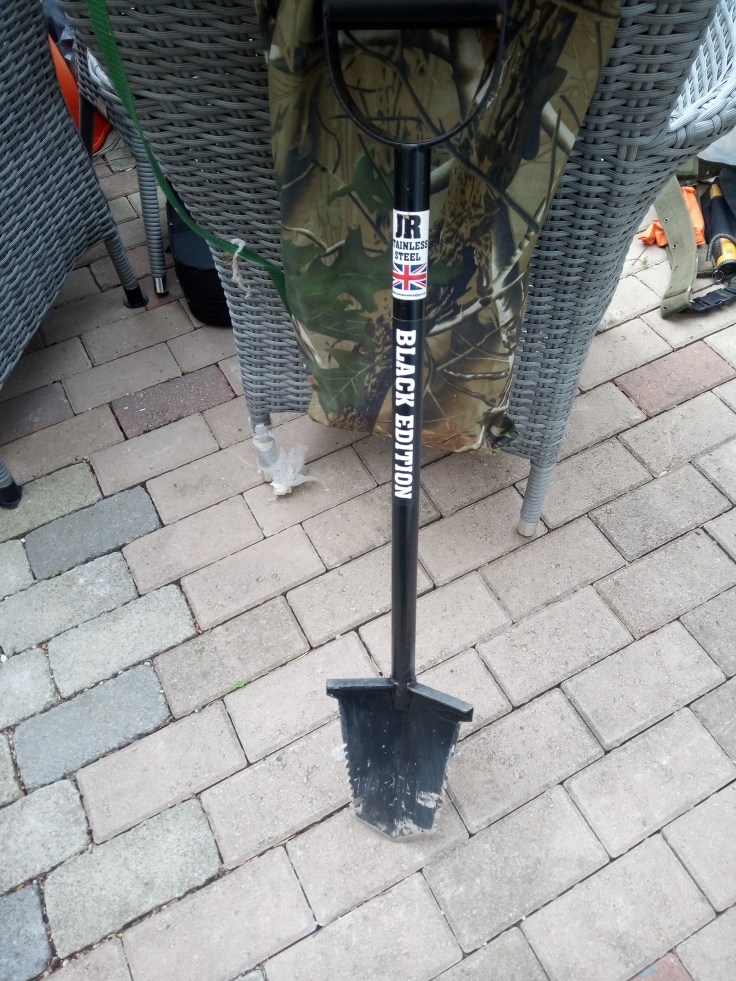
What is the difference ?
In reality, what do you need to dig a hole…
There are many ways to dig holes, but for metal detecting, there is an easy way or a hard way…
Spades or Shovels ?
Is there a difference between a spade & shovel, the answer is “Yes”
And a lot of people refer to the two species as the same, & this is where the problem lies, you walk into your local D.I.Y. shop and ask for a shovel or a spade, & nine times out of ten you will get one or the other, people just don’t associate the two as different…
As metal detectorists, we need a spade to dig with…
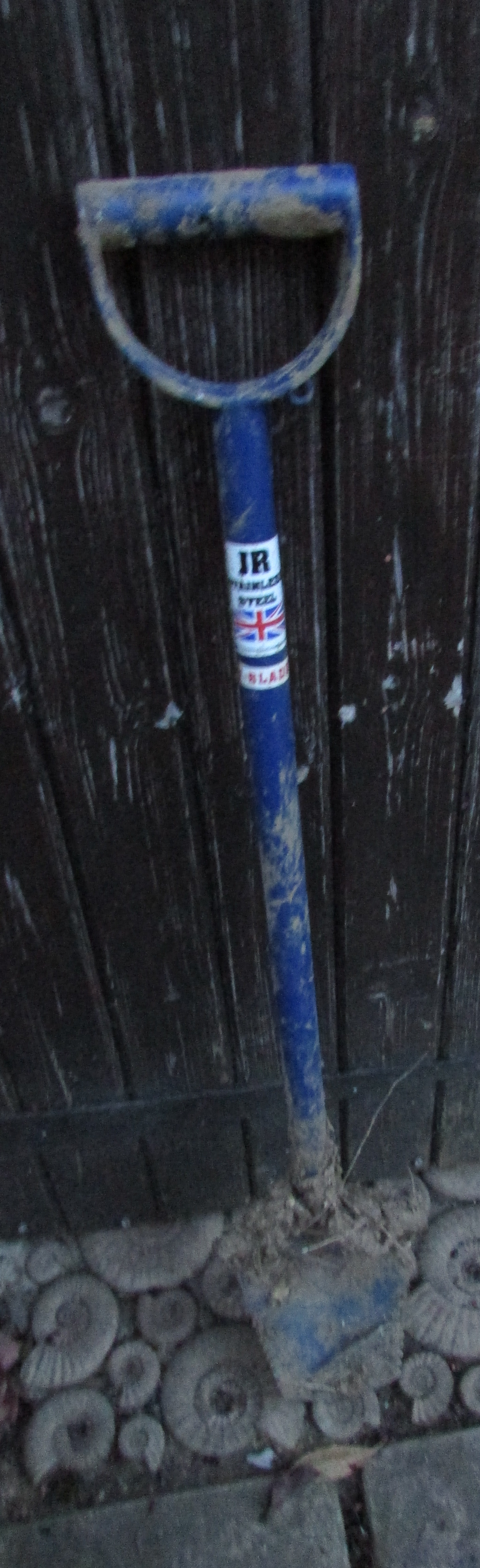
There are several differences, especially for those trying to dig a hole. While the head of the spade is solid and rigid, the shovel head has more flex & generally larger in size, & the shovel head is designed for moving large quanitys of material, whereas the spade enters the ground relatively easily, allowing an amount of soil to be moved, how much depands on the size of the spade head…Therefore, buying the right spade is also very important.
My advice is not to purchase a standard spade, but instead to go and look for a ladies’ border spade. The border spade is ideal for use in borders, flower beds, and tight spaces thanks to its narrow blade, with the bonus of a standard long handle & there lies the reason this is an ideal spade for metal detectorists, it has the long & strong blade, whilst the narrow blade is what we need as it’s lighter in weight for longer times out in the field, also you dont want to dig unnecessary & over large holes…
All spades have been designed & built for digging; ask any gardener or farmer…
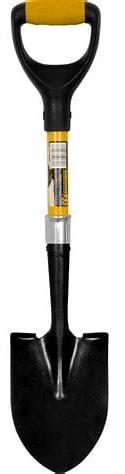
Plus for the Micro Shovel…
Whereas the shovel has been designed & built for moving a large amount of material at any one given time, with a common use being in the building trade. this micro shovel has become a popular favourite among metal detectorists, with its minuscule stature, it is an easy-to-carry, lightweight tool.
Against the Micro Shovel
It’s small size makes for uncomfortable digging, the blade is flexable & will twist under load ( IE It may be good for loose soil or sandy beaches, but, definitely not for hard arable ground conditions or pasture we commonly dig on as metal detectorists…
Spades built for Metal Detecting…
The metal detecting spade that I use is the JR-Stainless, but unfortunately, as much as I would like to recommend them, they have gone out of business, so as they are no longer made, what is the alternative…
There are a lot of companies manufacturing dedicated Stainless Steel Spades for the metal detectorist, not least of all Evolution, Noble or if you are handy then you can make your own…
A lot of metal detecting companies are now selling their own spades, shown here is the one made by Nokta, which is extendable, as you can see by the holes, the one thing that puts me off of this is the knurl in the middle of the handle to tighten it up, that would be where my hand sits !
There are three different sorts of stainless steel spades on the market for metal detectorists, you get the Field spade, Root spade, and Sniper spade… the most common SS Spade seen on any digs is the root spade, that’s the one with the serrated cut-outs, most of these are as sharp as the point of a knife because they were made to cut through various small root systems…
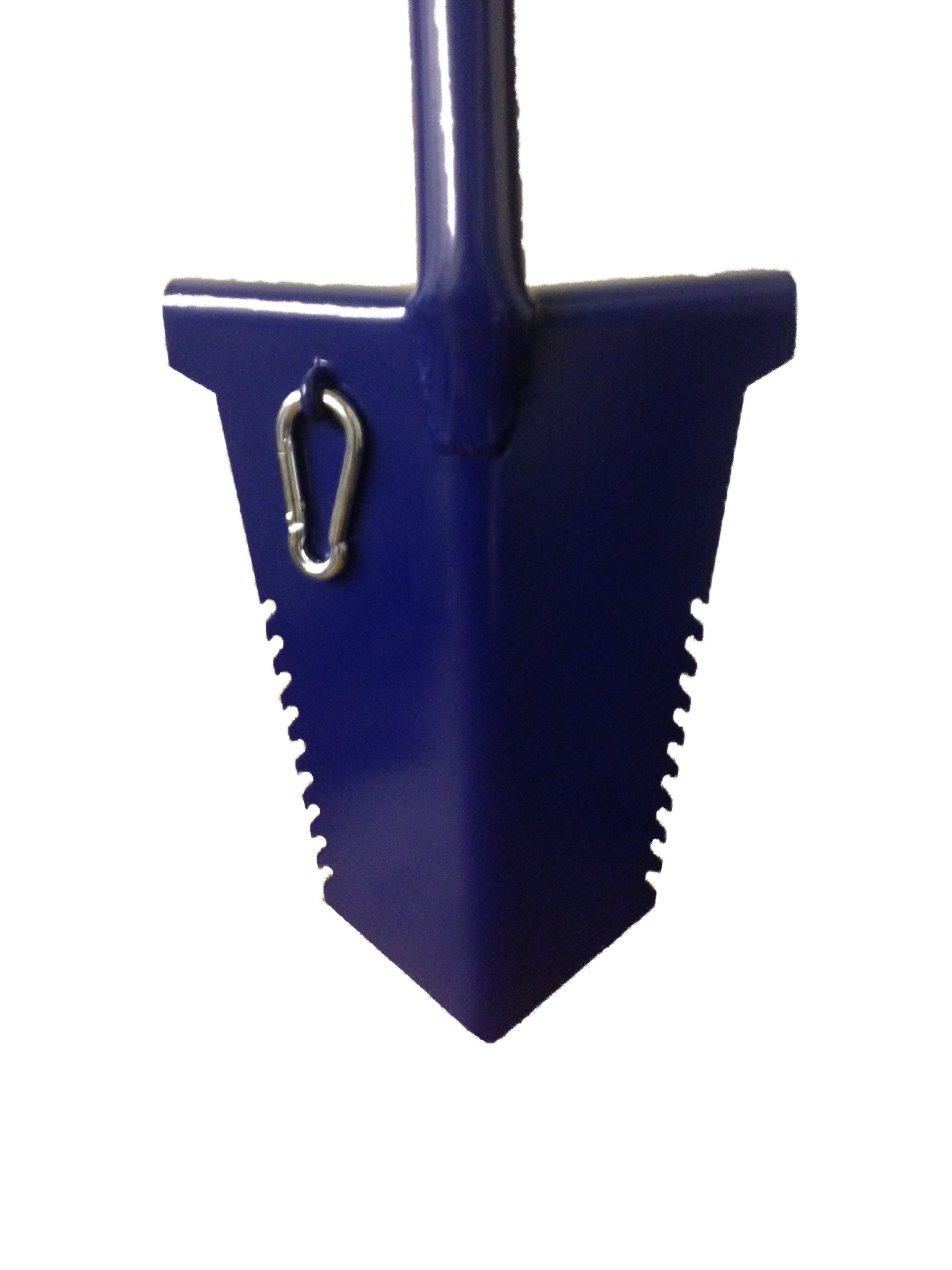
Also, make sure your spade has a boot saver, which is the little platform situated above the blade, this helps protect your footwear and more importantly, your feet, sizes on these boot savers will vary, but I think the bigger the better, weight-wise it makes no real difference, & if you are purchasing a spade with strap clips, make sure these are out of the way, I had mine put on the blade and under the handle…
Types of Metal Detecting Spades…
Field Spade…
A Field spade is any spade without serrations…
Root Spade…
A Root spade is any spade with serrations…
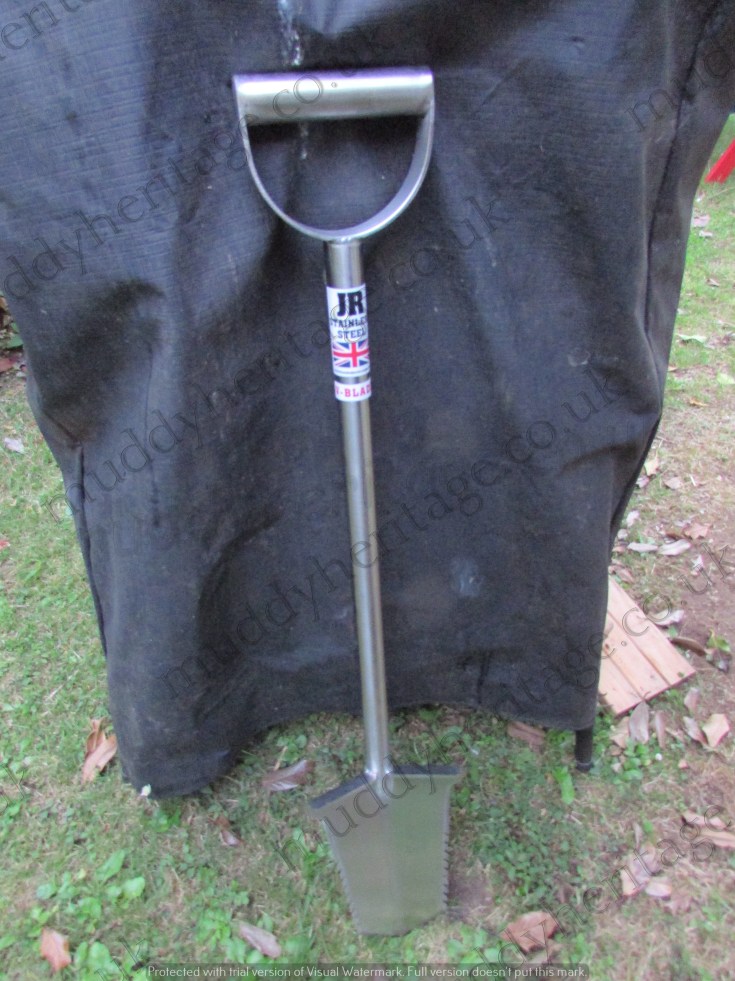
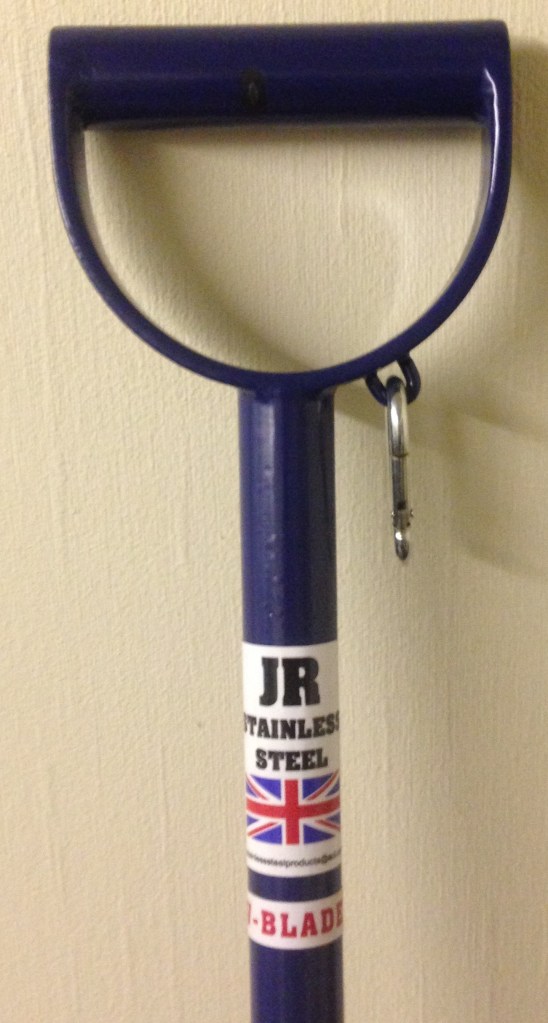
I personally preferred the Root spade, due to my land condition, so when I ordered my spade from JR Stainless, it turned out to be an incredible buy, as it turned out to be a beast of a digging tool…
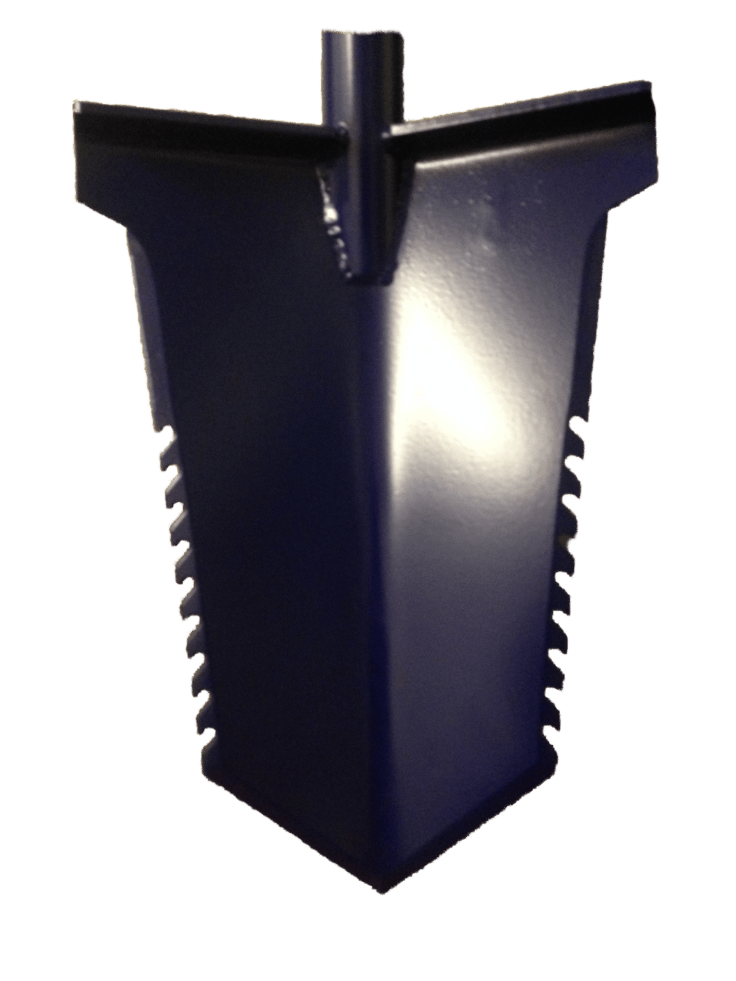
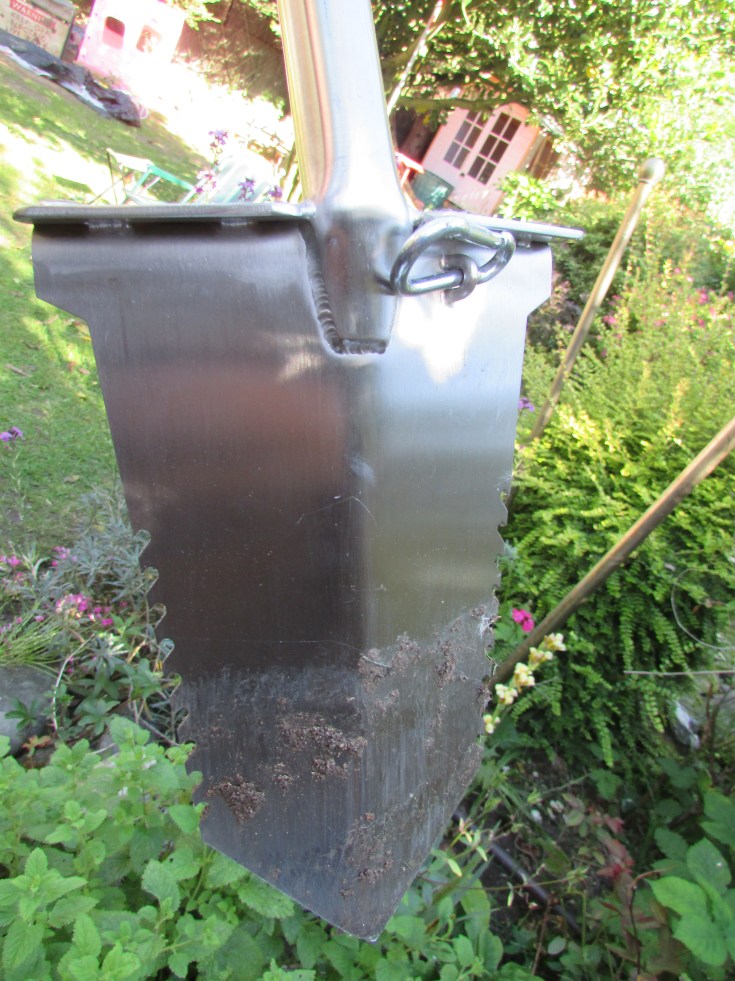
It’s thirty-six inches long with a D-shaped handle, which has serrations on both sides of the blade to help tear through the smaller cereal roots with ease, whilst the larger roots I occasionally come across have also proved not to be a problem…
As you can see, the boot saver is nice and wide, ensuring the feet do not get hurt digging through tough grass roots or the soles of the boots are not damaged…
Quite a few of the other purpose-built spade makers have strap clips to facilitate the use of either straps or rope to carry the spade over your shoulder.
But, to me their placement of these strap clips are not practical, when you’re out in the field, as you can see I had mine put on the back of the blade and under the handle, well out of the way of hands and feet, normally these would be placed on the shaft of the spade, where your hands are when your digging…
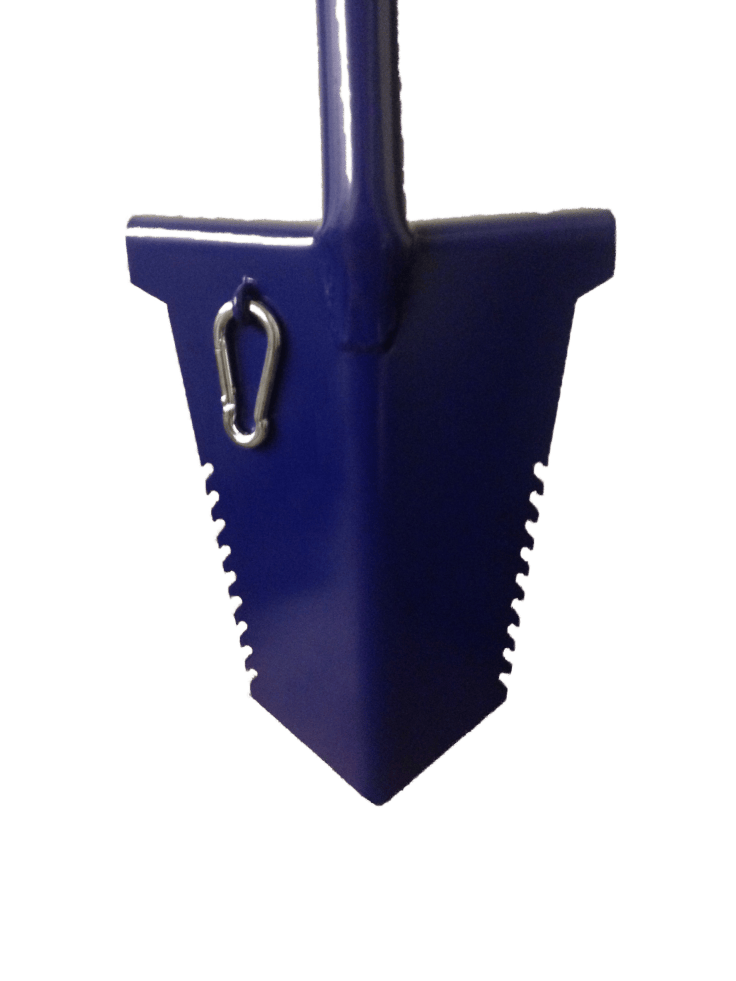
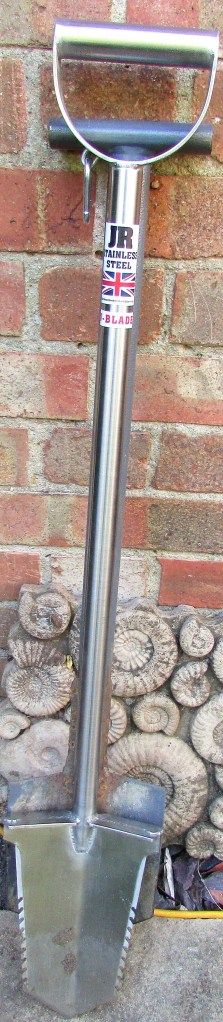
spade, just under three feet tall or 900 in new money
high, custom footplates &
so light to handle…
Below is my spare spade; it has a wider footplate, but the rest of the design is the same.
Metal Detecting Tools for Digging:
i am trying to make this a Complete Guide
I remember when I first started out metal detecting, all I had to dig with was a garden spade, it was the one was an old plastic gardening trowel. It was terrible, but I was determined. I did my best to pry through some small roots and around some small rocks, but there is only so much you can do without a proper digging tool. I have since upgraded to a true—well made—hand shovel, and if you plan on making metal detecting your hobby, so should you.
I think two recommended digging tools are essential to treasure hunting & more importantly, metal detecting…
A Heavy Duty Spade, preferable with a serrated blade for the smaller roots, & a good quality hand trowel… –
A shovel, and not just your standard spade head shovel from the hardware store, is definitely a necessity for metal detecting. Whether it’s to dig up deeply buried objects, or to cut through large stubborn roots, I always wind up using one of these on almost every outing. For me, a heavy-duty shovel with a serrated blade can be just as important as the metal detector itself in the process of reaching tough to get treasures.

The metal detecting shade that I use is the JR-Stainless but unfortinitly they are no longer made, so a quality made stainless steel spade, would still be best, make sure need to be made let me tell you it is a beast of a digging tool. It’s a 36-inch long T-shaped shovel with it also has one serrated side to help tear through the larger roots I occasionally come across.
Heavy duty hand shovel – Lesche Standard Digging Tool and Sod Cutter
A larger shovel is great for digging up a lot of dirt or for leveraging roots to the breaking point, but a hand shovel is great for digging up objects and not damaging them. I’ve had it happen to me in the past where I get overconfident and use my regular shovel to completely dig up an object and when I finally get it uncovered it has a huge scratch, or dent, or even cut from the blade of my digging tool. That’s why I have since learned to always use a hand shovel when I’m near the object, and importantly always use caution when I’m digging.
The hand shovel that I use when I’m metal detecting, which like my regular shovel is also made by Lesche, is the Lesche T-Handle Shovel 👈 link to Amazon. As the name suggests, along with being an amazing digging tool, this hand shovel also helps when I’m cutting through the top layer of some deeply rooted grasses. The shovel looks a lot like a blade, and even comes with its own belt holder. But most importantly, at least in my mind, it is definitely heavy duty and dependable enough to bring on any and every metal detecting outing.
WHY DIGGING IS A CORE SKILL WHEN METAL DETECTING
As I just explained, I’ve had my fair share of accidents when it comes to damaging an object while trying to dig it up. In my experience this is one of the worst feelings, especially if the object is in pretty good shape otherwise. Being careful while you’re digging is the most important aspect to being ‘good’ at digging up an object. But, of course, it’s not the only aspect to digging well.
The best reason that I have heard to why being good at digging is actually an important skill when metal detecting is that it doesn’t matter how good your metal detector is if you can’t get the object out of the ground. And it’s true, you could get a thousand hits but if you can’t find the target then it might as well not even be there.
Moreover, if it takes you forever to find a target, or if you wind up damaging the object or even your tools, then the whole thing can become more stress than it is fun. I think a lot of first timers can get discouraged, simply because it doesn’t feel good to not be good at what you’re doing. Having good digging skill is definitely a core skill to metal detecting for this reason.
THE IMPORTANCE OF A GREAT SHOVEL WHILE METAL DETECTING
One of my favorite things about having a good quality shovel is how quickly you can dig a search hole. A shovel which was designed with a geometry that fits its purpose is, of course, going to be better than one which was designed for general use labor. This is what a good heavy-duty metal detecting shovel is. It’s easier to do a job when you’ve got the right tools.
Another consideration which is important to make is what the material of the handle is. As I mentioned I prefer an all metal construction, and that is for the singular reason that it’s a lot more difficult to snap the thing if it’s made of aircraft grade aluminum rather than even the strongest piece of Hickory. Moreover, if the blade of the shovel is made of a hard metal then it will keep an edge better, and for longer, then a thin piece of cheap steel.

Another benefit to a specialized design is that it’s a lot easier to prevent yourself from damaging the object before you’ve even got it out of the ground. A metal detecting shovel will be smaller and have less curvature than a regular shovel. This makes it much easier to make a small hole with tight angles rather than a cone shaped divot in the ground.
As an added benefit, this superior design also means that you can fill your metal detecting plug quicker. This is partly because the shovel will help you move the dirt back in, but also because you were able to dig a smaller more precise hole in the first place, again, because of the special geometry of the head of the shovel.
On top of having a special design, the head of a good metal detecting shovel will have at least one edge which is serrated. This is because a thick root can be almost impossible to get through with out the ability to tear through it.
IS THE WEIGHT OF YOUR METAL DETECTING SHOVEL IMPORTANT?
In a sense… yes… but also not really. Anything at or under 3lbs is pretty much a good weight that won’t bother you too much. But, I’ve had a couple of bad experiences where I brought a regular spade shovel or even a particularly heavy metal detecting shovel, and believe me your arms will get tired. So, like I said, I think it’s best to stick to the lighter 3lb or less variant. Here is a char of the weights of some of the most popular metal detecting shovels…
| BRAND | Weight | Total Length |
| Lesche T-Handle Heavy Duty | 3 pounds | 31 inches |
| Whites Ground Hawg | 2.85 pounds | 36 inches |
| Anaconda NX-5 Long Handle | 3.85 pounds | 31 inches |
OTHER THINGS TO CONSIDER WITH YOUR METAL DETECTING SHOVEL
Length of Handle: Comfort and Leverage
The longer the handle, the more leverage you’ll be able to take advantage of when prying through roots or even just some particularly tough ground. However, I have had some handles snap, so it is important to consider the material of the handle when you’re also looking at the length of the handle.
The End Grip on the Handle: T, Straight and Ball:
Again, a T-handle can give you some extra grip to take advantage of as much leverage as possible. To a lesser extent this is also true of a ball handled metal detecting shovel. However, ultimately this is a personal preference that you need to think about before making your purchase.
Sturdy, Prying:
As I mentioned, the durability of your metal detecting shovel will determine what kind of stress you can put it under. This isn’t just about material, however, the quality of the connection points between the head of your shovel, or between the handle and the body of your shovel, can also determine how much you can do with it.
Sharp and Serrated:
Most people, including myself at one point, never think about the head of a shovel ad a blade. But, the head of a shovel is basically cutting through the ground, and anything else that might be in it. A sharp shovel head, with at least one serrated edge, it an invaluable tool on any metal detecting outing.
Sturdy, Prying:
As I mentioned, the durability of your metal detecting shovel will determine what kind of stress you can put it under. This isn’t just about material, however, the quality of the connection points between the head of your shovel, or between the handle and the body of your shovel, can also determine how much you can do with it.
Sharp and Serrated:
Most people, including myself at one point, never think about the head of a shovel ad a blade. But, the head of a shovel is basically cutting through the ground, and anything else that might be in it. A sharp shovel head, with at least one serrated edge, it an invaluable tool on any metal detecting outing.
Project


Welcome to a world of limitless possibilities, where the journey is as exhilarating as the destination, and where every moment is an opportunity to make your mark on the canvas of existence. The only limit is the extent of your imagination.
Let me introduce you to Lee Berry…
So I am going to let you know a little bit about myself…

I am a keen metal detector user & have been detecting on and off for the last 8 years, it’s a hobby that is very close to my heart for personal reasons (divorce, mental health, etc)

This hobby gives me pleasure and nothing quite like the chance of holding history in your hands As you know metal detecting is and can be an expensive hobby especially all the accessories especially the spades, trowels daggers, etc. By accident, I came up with the idea that I wanted to buy a serrated spade and then started looking at the price of them and was like WOW can’t justify paying that price…
Anyway, to cut a long story short, I had a couple of spare spades, and I spoke to a friend of mine next door who’s a fabricator and asked if he could grind my spade into a design. He did, and it saved me a lot of time and money. The end result is very pleasing and does the job. I am not in it for making money; I’m in it for the hobby and to see if I can help people…
The spades are priced at £28.50 for mini and £35 for large in 4 available styles for you to choose from…
You can find Lee on Facebook & drop him a message…
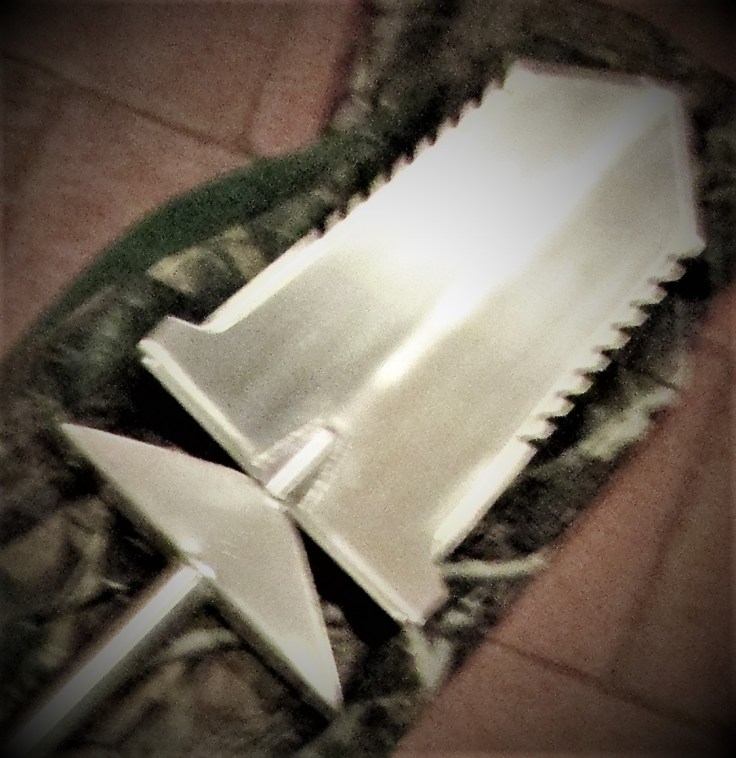
spade, just under three feet tall or 900 in new money
high, custom footplates &
so light to handle…
good solid footplate 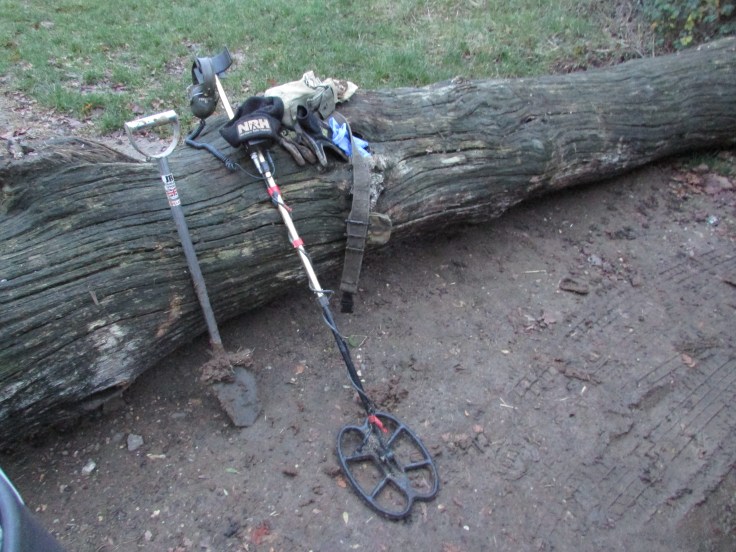
Metal Detecting Tools for Digging:
i am trying to make this a Complete Guide
I remember when I first started out metal detecting, all I had to dig with was a garden spade, it was the one was an old plastic gardening trowel. It was terrible, but I was determined. I did my best to pry through some small roots and around some small rocks, but there is only so much you can do without a proper digging tool. I have since upgraded to a true—well made—hand shovel, and if you plan on making metal detecting your hobby, so should you.
I think two recommended digging tools are essential to treasure hunting & more importantly, metal detecting…
A Heavy Duty Spade, preferable with a serrated blade for the smaller roots, & a good quality hand trowel… –
A shovel, and not just your standard spade head shovel from the hardware store, is definitely a necessity for metal detecting. Whether it’s to dig up deeply buried objects, or to cut through large stubborn roots, I always wind up using one of these on almost every outing. For me, a heavy-duty shovel with a serrated blade can be just as important as the metal detector itself in the process of reaching tough to get treasures.
The metal detecting shade that I use is the JR-Stainless but unfortinitly they are no longer made, so a quality made stainless steel spade, would still be best, make sure need to be made let me tell you it is a beast of a digging tool. It’s a 36-inch long T-shaped shovel with it also has one serrated side to help tear through the larger roots I occasionally come across.
Heavy duty hand shovel – Lesche Standard Digging Tool and Sod Cutter
A larger shovel is great for digging up a lot of dirt or for leveraging roots to the breaking point, but a hand shovel is great for digging up objects and not damaging them. I’ve had it happen to me in the past where I get overconfident and use my regular shovel to completely dig up an object and when I finally get it uncovered it has a huge scratch, or dent, or even cut from the blade of my digging tool. That’s why I have since learned to always use a hand shovel when I’m near the object, and importantly always use caution when I’m digging.
The hand shovel that I use when I’m metal detecting, which like my regular shovel is also made by Lesche, is the Lesche T-Handle Shovel 👈 link to Amazon. As the name suggests, along with being an amazing digging tool, this hand shovel also helps when I’m cutting through the top layer of some deeply rooted grasses. The shovel looks a lot like a blade, and even comes with its own belt holder. But most importantly, at least in my mind, it is definitely heavy duty and dependable enough to bring on any and every metal detecting outing.
WHY DIGGING IS A CORE SKILL WHEN METAL DETECTING
As I just explained, I’ve had my fair share of accidents when it comes to damaging an object while trying to dig it up. In my experience this is one of the worst feelings, especially if the object is in pretty good shape otherwise. Being careful while you’re digging is the most important aspect to being ‘good’ at digging up an object. But, of course, it’s not the only aspect to digging well.
The best reason that I have heard to why being good at digging is actually an important skill when metal detecting is that it doesn’t matter how good your metal detector is if you can’t get the object out of the ground. And it’s true, you could get a thousand hits but if you can’t find the target then it might as well not even be there.
Moreover, if it takes you forever to find a target, or if you wind up damaging the object or even your tools, then the whole thing can become more stress than it is fun. I think a lot of first timers can get discouraged, simply because it doesn’t feel good to not be good at what you’re doing. Having good digging skill is definitely a core skill to metal detecting for this reason.
THE IMPORTANCE OF A GREAT SHOVEL WHILE METAL DETECTING
One of my favorite things about having a good quality shovel is how quickly you can dig a search hole. A shovel which was designed with a geometry that fits its purpose is, of course, going to be better than one which was designed for general use labor. This is what a good heavy-duty metal detecting shovel is. It’s easier to do a job when you’ve got the right tools.
Another consideration which is important to make is what the material of the handle is. As I mentioned I prefer an all metal construction, and that is for the singular reason that it’s a lot more difficult to snap the thing if it’s made of aircraft grade aluminum rather than even the strongest piece of Hickory. Moreover, if the blade of the shovel is made of a hard metal then it will keep an edge better, and for longer, then a thin piece of cheap steel.
Another benefit to a specialized design is that it’s a lot easier to prevent yourself from damaging the object before you’ve even got it out of the ground. A metal detecting shovel will be smaller and have less curvature than a regular shovel. This makes it much easier to make a small hole with tight angles rather than a cone shaped divot in the ground.
As an added benefit, this superior design also means that you can fill your metal detecting plug quicker. This is partly because the shovel will help you move the dirt back in, but also because you were able to dig a smaller more precise hole in the first place, again, because of the special geometry of the head of the shovel.
On top of having a special design, the head of a good metal detecting shovel will have at least one edge which is serrated. This is because a thick root can be almost impossible to get through with out the ability to tear through it.
IS THE WEIGHT OF YOUR METAL DETECTING SHOVEL IMPORTANT?
In a sense… yes… but also not really. Anything at or under 3lbs is pretty much a good weight that won’t bother you too much. But, I’ve had a couple of bad experiences where I brought a regular spade shovel or even a particularly heavy metal detecting shovel, and believe me your arms will get tired. So, like I said, I think it’s best to stick to the lighter 3lb or less variant. Here is a char of the weights of some of the most popular metal detecting shovels…
| BRAND | Weight | Total Length |
| Lesche T-Handle Heavy Duty | 3 pounds | 31 inches |
| Whites Ground Hawg | 2.85 pounds | 36 inches |
| Anaconda NX-5 Long Handle | 3.85 pounds | 31 inches |
OTHER THINGS TO CONSIDER WITH YOUR METAL DETECTING SHOVEL
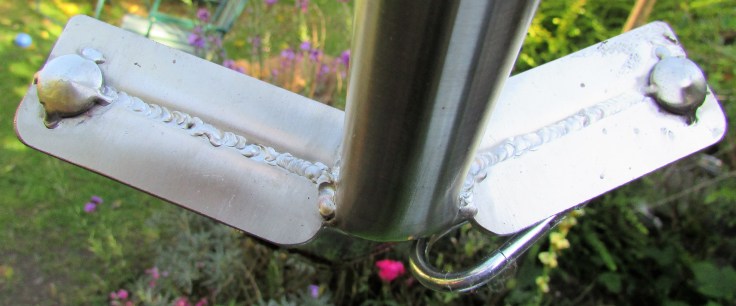
i have left this photo large, so as you can see the quality of the weld, and the detail JR put into the craftsmanship, this is my other custom-built spade, it has a larger footplate, and the strap carrier is again placed on the blade, and not on the shaft where it interferes with the movement of your hand, not only as you dig, but just carrying the spade in your hand when they are placed on the handle, you always seem to grab the raised section…my second custom digging
spade, just under three feet tall or 900 in new money
high, custom footplates &
so light to handle…
Metal Detecting Tools for Digging:
I remember when I first started out metal detecting, all I had to dig with was a garden spade, it was the one was an old plastic gardening trowel. It was terrible, but I was determined. I did my best to pry through some small roots and around some small rocks, but there is only so much you can do without a proper digging tool. I have since upgraded to a true—well made—hand shovel, and if you plan on making metal detecting your hobby, so should you.
I think two recommended digging tools are essential to treasure hunting & more importantly, metal detecting…
A Heavy Duty Spade, preferable with a serrated blade for the smaller roots, & a good quality hand trowel… –
A shovel, and not just your standard spade head shovel from the hardware store, is definitely a necessity for metal detecting. Whether it’s to dig up deeply buried objects, or to cut through large stubborn roots, I always wind up using one of these on almost every outing. For me, a heavy-duty shovel with a serrated blade can be just as important as the metal detector itself in the process of reaching tough to get treasures.when the weather drowns the field your digging in, a stout rest is a must…
The metal detecting shade that I use is the JR-Stainless but unfortinitly they are no longer made, so a quality made stainless steel spade, would still be best, make sure need to be made let me tell you it is a beast of a digging tool. It’s a 36-inch long T-shaped shovel with it also has one serrated side to help tear through the larger roots I occasionally come across.
Heavy duty hand shovel – Lesche Standard Digging Tool and Sod Cutter
A larger shovel is great for digging up a lot of dirt or for leveraging roots to the breaking point, but a hand shovel is great for digging up objects and not damaging them. I’ve had it happen to me in the past where I get overconfident and use my regular shovel to completely dig up an object and when I finally get it uncovered it has a huge scratch, or dent, or even cut from the blade of my digging tool. That’s why I have since learned to always use a hand shovel when I’m near the object, and importantly always use caution when I’m digging.
The hand shovel that I use when I’m metal detecting, which like my regular shovel is also made by Lesche, is the Lesche T-Handle Shovel 👈 link to Amazon. As the name suggests, along with being an amazing digging tool, this hand shovel also helps when I’m cutting through the top layer of some deeply rooted grasses. The shovel looks a lot like a blade, and even comes with its own belt holder. But most importantly, at least in my mind, it is definitely heavy duty and dependable enough to bring on any and every metal detecting outing.
https://www.youtube.com/embed/AjZq0fYc6Nc?feature=oembed
WHY DIGGING IS A CORE SKILL WHEN METAL DETECTING
As I just explained, I’ve had my fair share of accidents when it comes to damaging an object while trying to dig it up. In my experience this is one of the worst feelings, especially if the object is in pretty good shape otherwise. Being careful while you’re digging is the most important aspect to being ‘good’ at digging up an object. But, of course, it’s not the only aspect to digging well.
The best reason that I have heard to why being good at digging is actually an important skill when metal detecting is that it doesn’t matter how good your metal detector is if you can’t get the object out of the ground. And it’s true, you could get a thousand hits but if you can’t find the target then it might as well not even be there.
Moreover, if it takes you forever to find a target, or if you wind up damaging the object or even your tools, then the whole thing can become more stress than it is fun. I think a lot of first timers can get discouraged, simply because it doesn’t feel good to not be good at what you’re doing. Having good digging skill is definitely a core skill to metal detecting for this reason.
THE IMPORTANCE OF A GREAT SHOVEL WHILE METAL DETECTING
One of my favorite things about having a good quality shovel is how quickly you can dig a search hole. A shovel which was designed with a geometry that fits its purpose is, of course, going to be better than one which was designed for general use labor. This is what a good heavy-duty metal detecting shovel is. It’s easier to do a job when you’ve got the right tools.
Another consideration which is important to make is what the material of the handle is. As I mentioned I prefer an all metal construction, and that is for the singular reason that it’s a lot more difficult to snap the thing if it’s made of aircraft grade aluminum rather than even the strongest piece of Hickory. Moreover, if the blade of the shovel is made of a hard metal then it will keep an edge better, and for longer, then a thin piece of cheap steel.Hand Trowel for Metal Detecting
Another benefit to a specialized design is that it’s a lot easier to prevent yourself from damaging the object before you’ve even got it out of the ground. A metal detecting shovel will be smaller and have less curvature than a regular shovel. This makes it much easier to make a small hole with tight angles rather than a cone shaped divot in the ground.
As an added benefit, this superior design also means that you can fill your metal detecting plug quicker. This is partly because the shovel will help you move the dirt back in, but also because you were able to dig a smaller more precise hole in the first place, again, because of the special geometry of the head of the shovel.
On top of having a special design, the head of a good metal detecting shovel will have at least one edge which is serrated. This is because a thick root can be almost impossible to get through with out the ability to tear through it.
IS THE WEIGHT OF YOUR METAL DETECTING SHOVEL IMPORTANT?
In a sense… yes… but also not really. Anything at or under 3lbs is pretty much a good weight that won’t bother you too much. But, I’ve had a couple of bad experiences where I brought a regular spade shovel or even a particularly heavy metal detecting shovel, and believe me your arms will get tired. So, like I said, I think it’s best to stick to the lighter 3lb or less variant. Here is a char of the weights of some of the most popular metal detecting shovels…
BRAND
Weight
Total Length
Lesche T-Handle Heavy Duty
3 pounds
31 inches
Whites Ground Hawg
2.85 pounds
36 inches
Anaconda NX-5 Long Handle
3.85 pounds
31 inches
OTHER THINGS TO CONSIDER WITH YOUR METAL DETECTING SHOVEL
Length of Handle: Comfort and Leverage
The longer the handle, the more leverage you’ll be able to take advantage of when prying through roots or even just some particularly tough ground. However, I have had some handles snap, so it is important to consider the material of the handle when you’re also looking at the length of the handle.
The End Grip on the Handle: T, Straight and Ball:
Again, a T-handle can give you some extra grip to take advantage of as much leverage as possible. To a lesser extent this is also true of a ball handled metal detecting shovel. However, ultimately this is a personal preference that you need to think about before making your purchase.
Sturdy, Prying:
As I mentioned, the durability of your metal detecting shovel will determine what kind of stress you can put it under. This isn’t just about material, however, the quality of the connection points between the head of your shovel, or between the handle and the body of your shovel, can also determine how much you can do with it.
Sharp and Serrated:
Most people, including myself at one point, never think about the head of a shovel ad a blade. But, the head of a shovel is basically cutting through the ground, and anything else that might be in it. A sharp shovel head, with at least one serrated edge, it an invaluable tool on any metal detecting outing.
Project
Length of Handle: Comfort and Leverage
The longer the handle, the more leverage you’ll be able to take advantage of when prying through roots or even just some particularly tough ground. However, I have had some handles snap, so it is important to consider the material of the handle when you’re also looking at the length of the handle.
The End Grip on the Handle: T, Straight and Ball:
Again, a T-handle can give you some extra grip to take advantage of as much leverage as possible. To a lesser extent this is also true of a ball handled metal detecting shovel. However, ultimately this is a personal preference that you need to think about before making your purchase.
Sturdy, Prying:
As I mentioned, the durability of your metal detecting shovel will determine what kind of stress you can put it under. This isn’t just about material, however, the quality of the connection points between the head of your shovel, or between the handle and the body of your shovel, can also determine how much you can do with it.
Sharp and Serrated:
Most people, including myself at one point, never think about the head of a shovel ad a blade. But, the head of a shovel is basically cutting through the ground, and anything else that might be in it. A sharp shovel head, with at least one serrated edge, it an invaluable tool on any metal detecting outing.