
This is my idea of starting your journey…
To go metal detecting, we need a Metal Detector…
So “of course” we need a metal detector to go metal detecting, but which one to choose & why-?
That’s the biggest question: with everyone having their own budget, do you buy second-hand or brand new-?
As tempting as it is to buy one of the many brand-new Chinese metal detectors, please don’t…
They are so cheap compared to the tried and trusted brand names, but they are cheap for a reason, all they want is your money, they are poor quality machines with very poor build quality, electronics are not stable, with the circuit board being factory soldered and even if you tried to put up with everything just remember, the idea of a metal detector is to find metal…. and with the ones we have tested, you won’t find anything…

Now let’s look at the second-hand market, if your going to buy a machine for the first time then i suggest you go down this route, this way you can find out if this hobby / pastime is for you, as most minelabs along with the Garret range of metal detectors hold there value, whilst threr are many other “Branded” detectors which are good for a first purchase, but are less expensive on the second-hand market, so what do i mean by “Branded” by this i mean the main players in the hobby market, and not Chinese imports or other brands from non-English speaking country’s…
The main reason for using a known branded metal detector from an English speaking country or alternatively a detector from a non-English speaking country that has a well-proven track record, such as the French XP Range, which has amongst its stable the Deus, or Noxta, a Turkish metal detector which has amongst its many detectors the proven legend or Kruzer & Kruzer Plus… we have many machines coming out now that are so cheap to buy, yet seem to be very effective out on the field, like the simplex,
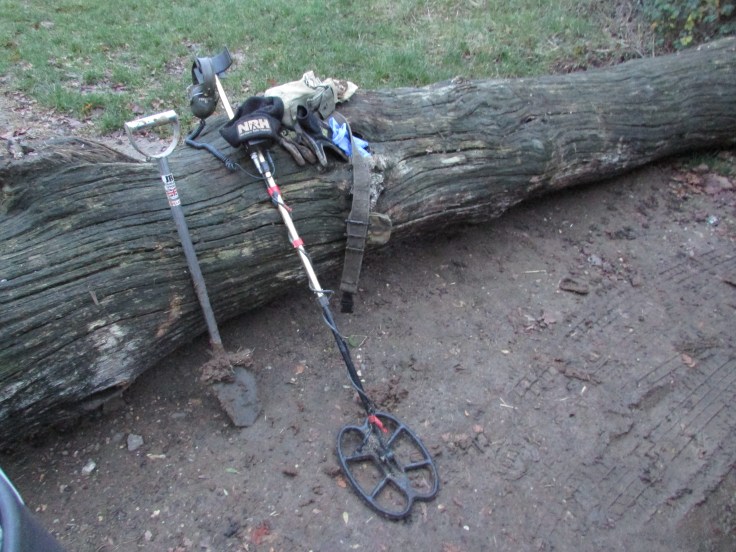
When purchasing anything research is vital, especially if you know nothing about what you are buying, even in today’s society there are many clever ads ready to squeeze your money from you with reality being a bitter lesson & a hard one to swallow, hence no one can vouch for any non branded metal detectors, or their success, whilst Chinese imports are cheap, but they really don’t work beyond the confines of a living room…

People are funny creatures & many Metal Detectorists want the newest metal detectors as soon as they come onto the market, & many metal detectors costing upwards of £ 900.00p can be bought quite cheaply after about three years, most of the green classic T2’s come back on the market for around £ 250 to £ 350 which is great for those in the market for a detector that performs out in the field, the cheaper end of the detector market though retain the value a lot better, very rarely do many detectors at the higher end hold the market value once used…
Children benefit from the right detector, more than adults, and if the balance is right, and they can use the machine, then boredom will not set in, for ages 4 to 10 years old, a Nokta treasure find is the best to use, as there is no headphones socket, so it protects the ears, it’s remarkably deep, & lightweight for the cost, and will find coins and artefacts, also it has the added benefit of being waterproof…
For a child of 10 years old & upward, or those children with a greater grasp and stature, then the choice is greater, with a lot depending on the size of the child, but on average from 10 years old numerous new machines like the Findex by Nokta, Quest X10 or the Dues, having great technology with proven track records. Still, although Minelab does smaller machines, the downside is that they are heavier & the build quality lets them down, whilst the tried & trusted Garrett Ace 150 will get anyone onto the detecting ladder. Still, like the C.Scope range, & the Minelab are all on the heavier side…
From about 14 years of age, and depending on the maturity of the child and their stature, any branded lightweight detector will suffice until their strength improves. One downside is that the cost will invariably increase, but for the enjoyment value, the cost is negotiable. For the best result, go to any outlet near you and just try them out and feel the weight…
So you bought your new pride and joy, but how do you use it…
Read the instructions, then read them again; this time follow the detector manual using your detector…
to be continued


When Metal Detectorists Turn Bad…
Click the above link… as this post is from the The Metal Detectives Group
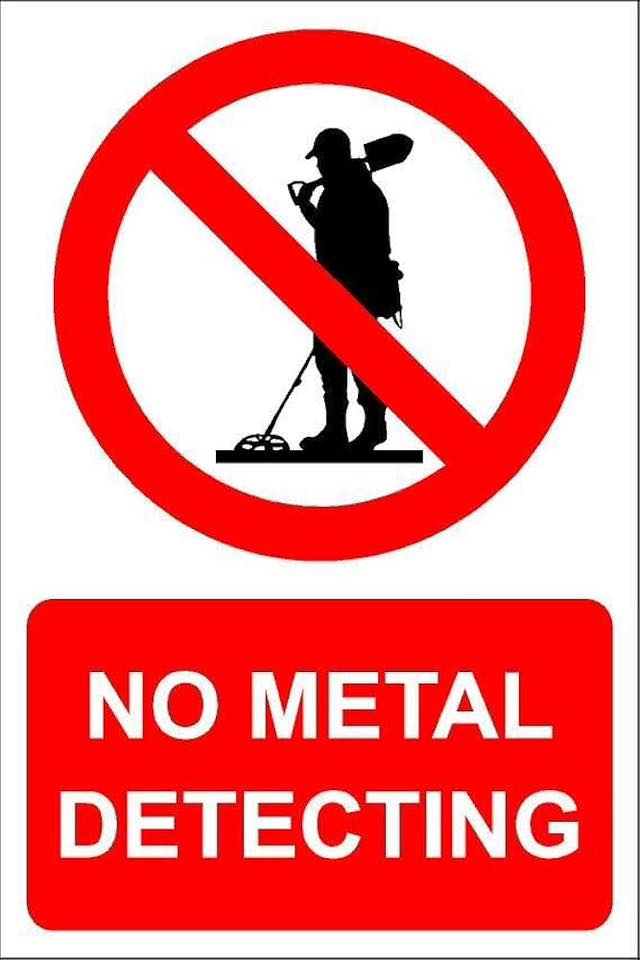
Metal detecting is a popular hobby that allows enthusiasts to uncover pieces of history buried beneath the soil, contributing to our understanding of the past when done responsibly.
However, when a metal detectorist disregards the laws, permissions, and ethical guidelines, their actions can result in the irreversible loss of cultural heritage. In the UK, activities like nighthawking — which is illegal metal detecting on protected historical sites, most often metal detected under the cover of darkness—and failing to report significant finds under the Treasure Act 1996 are serious offenses. These crimes purport to not only rob the public of historical knowledge but also damage archaeological contexts forever.
Below, we explore several documented cases where metal detectorists faced prosecution for such violations, drawing from verified news reports and court outcomes.
The Leominster Hoard: A Viking Treasure Stolen and Sold
One of the most high-profile cases involved the theft of the Leominster Hoard, a collection of Viking-era artifacts discovered in 2015 on private land near Leominster, Herefordshire. George Powell and Layton Davies unearthed approximately 300 coins, a ninth-century gold ring, a dragon’s head bracelet, and a crystal rock pendant, all without the landowner’s permission or proper reporting. Instead of declaring the find as required by law, they attempted to sell items on the black market, including taking one coin to the National Museum of Wales for identification, which raised suspicions and led to a police investigation. In 2019, Powell was sentenced to 10 years in prison (later reduced to six and a half years), and Davies received eight and a half years (reduced to five), for theft, concealment, and attempts to sell the hoard. Both were released in 2022, but they failed to comply with £600,000 confiscation orders, having paid only £3,000 combined. As a result, Powell was recently returned to jail, facing an additional potential 64 months, while Davies risks the same for non-payment. Most of the hoard, valued at up to £12 million, remains missing, depriving historians of insights into an alliance between King Alfred and King Ceolwulf II.
The Hayton Farmland Raid: A Group Caught in the Act…
In March 2022, a gang from near Sunderland was prosecuted for nighthawking on private farmland near Hayton, East Yorkshire. Scott Turton (43), Andrew Richardson (43), Marc Scantlebury (40), and Robert Armstrong (42) were found illegally using metal detectors without permission, committing criminal damage and going equipped for theft. They pleaded guilty at Hull Magistrates Court in January 2024 and were sentenced the following month. Armstrong received a 21-week jail term, while Turton and Scantlebury each got 17-week suspended sentences for 12 months plus £350 fines; Richardson was fined £120. All had their metal detecting equipment confiscated under deprivation orders. No specific artifacts were recovered in reports, but the case underscored the harm to landowners and heritage, with Humberside Police praising community cooperation.
The Tameside Gang: Plundering Protected Monuments…
A group known as the Tameside nighthawking gang targeted two English Heritage sites in December 2019: Beeston Castle in Cheshire and Roche Abbey in South Yorkshire. Curtis Barlow (32), Gary Flanagan (33), Daniel James Lloyd (33), John Andrew Lorne (29), and Francis James Ward (32), all from Droylsden, were admitted to unlawful metal detecting and removing items like coins, Bronze Age axe heads, and other metal artifacts. The investigation, involving Cheshire Police, South Yorkshire Police, and Historic England, used phone analysis and a WhatsApp group to build evidence. Sentenced at Chester Magistrates’ Court in May 2021, they received fines ranging from £572 to £1,760 plus surcharges, and a groundbreaking five-year Criminal Behaviour Order banning them from historic sites in England and Wales. Breaching the order could lead to further imprisonment.
The Combretovium Dig: Targeting a Roman Legacy…
In a case sentenced in July 2023, four men—Bradley Ling (24), Kyle Mickleburgh (25), Michael Travell (38), and Aaron Williams (25)—were convicted for an illegal dig at the site of the ancient Roman town of Combretovium near Coddenham, Suffolk. They engaged in organized nighthawking on a scheduled monument without permission, equipped for theft, causing damage to archaeological deposits. Caught by police using thermal imaging, they possessed coins from the site. Each received a 16-week suspended sentence for 18 months, 90 days of GPS tagging, £399 in compensation and costs, and rehabilitation requirements. The coins were forfeited, and their metal detectors were ordered destroyed. The site, featured on the ancient Peutinger Table, has yielded artifacts like a Roman urn and a bronze mirror now in the British Museum.
The Durobrivae Incident: An Early Precedent…
Back in May 2015, Keith Stacey and Samuel Wildman were prosecuted for unlawful metal detecting at the protected Romano-British site of Durobrivae Roman town near Water Newton, Cambridgeshire. They committed attempted theft and went equipped to steal on private farmland without a Historic England license. Witnessed by a farm worker who provided photos, they were convicted at Peterborough Magistrates Court in July 2016. Each received a 12-month community order, 200 hours of unpaid work, and £300 in costs. This case was part of Operation Chronos, a national anti-nighthawking campaign, and led to improved site security like perimeter fencing.
Other Notable Case…
In 2012, Peter Cox and Darren West looted artifacts from a former Roman town site in Northamptonshire, leaving large holes and returning to the scene, which led to their capture via camera evidence and inspections. Additionally, ongoing concerns about illegal treasure hunting in Wales highlight black market activities targeting ancient sites, though specific recent prosecutions were not detailed in reports from 2025.
The above cases illustrate the consequences of turning a legitimate hobby into a criminal activity. Prosecutions have increased thanks to better collaboration between police, Historic England, and communities, but the black market persists. Responsible detectorists follow codes like those from the National Council for Metal Detecting, reporting finds and obtaining permissions to preserve history for future generations.
Gold Hunting
Cumbrian Minerals posted about this on Facebook, and with their permission, here is the following…
Cumbrian Minerals is a friendly community for anyone interested in the minerals and mining heritage of Cumbria and the North of England. Click on the highlights & to see what else Cumbrian Minerals have to say…
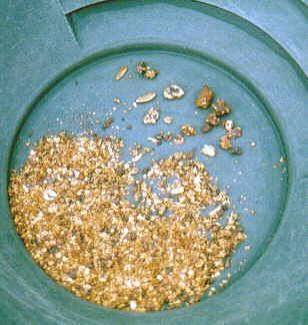
Gold has turned up in tiny traces around the River Eden, Caldbeck fells, Borrowdale, and Sedbergh.
What’s there is alluvial, which is basically very fine flakes of gold that have been washed out of surrounding rocks over time and carried into the river gravels.
It’s mostly erosion doing the work, slowly releasing small amounts of gold from higher ground, including parts of the Lake District and nearby areas.
Around Sedbergh, small traces have been noted in streams and gravel beds, but again, they’re extremely fine.
You’re talking specks, not anything you’d spot easily, and certainly not nuggets.
There’s no history of anyone mining gold here on a commercial scale.
It’s always been too scattered and in too small quantities to be worth mining, but the fact that we have it in the county is exciting.
So while gold is present in the River Eden system, it’s more of a geological footnote than anything else, something that’s there in the background rather than something people ever worked for.
Before we start any prospecting, we must obtain the land owner’s permission, and please take into consideration the environmental impacts…
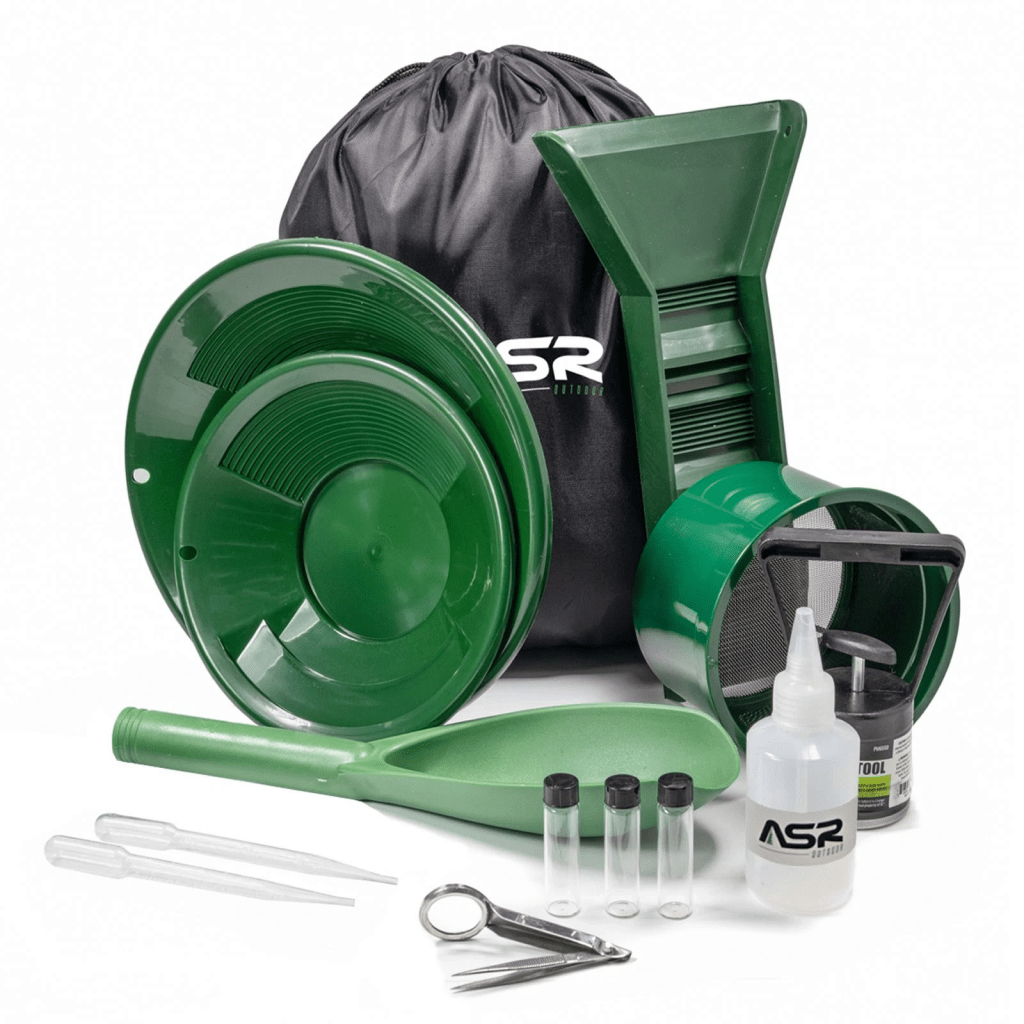
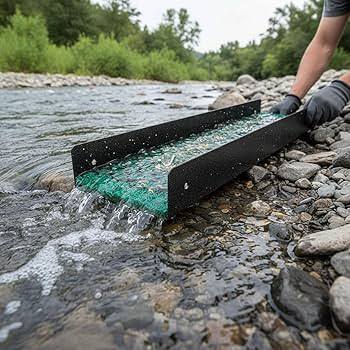
Below is just some of the equipment for gold prospecting  .
.
Many of these kits or individual bits of equipment are readily available in the UK, on eBay, Amazon, or most Treasure Hunting shops, along with gold panning courses which are an ideal, if somewhat different birthday or Christmas gift…



Leave a comment