Before we start, look at this “Timeline for the Romans”, then & now…
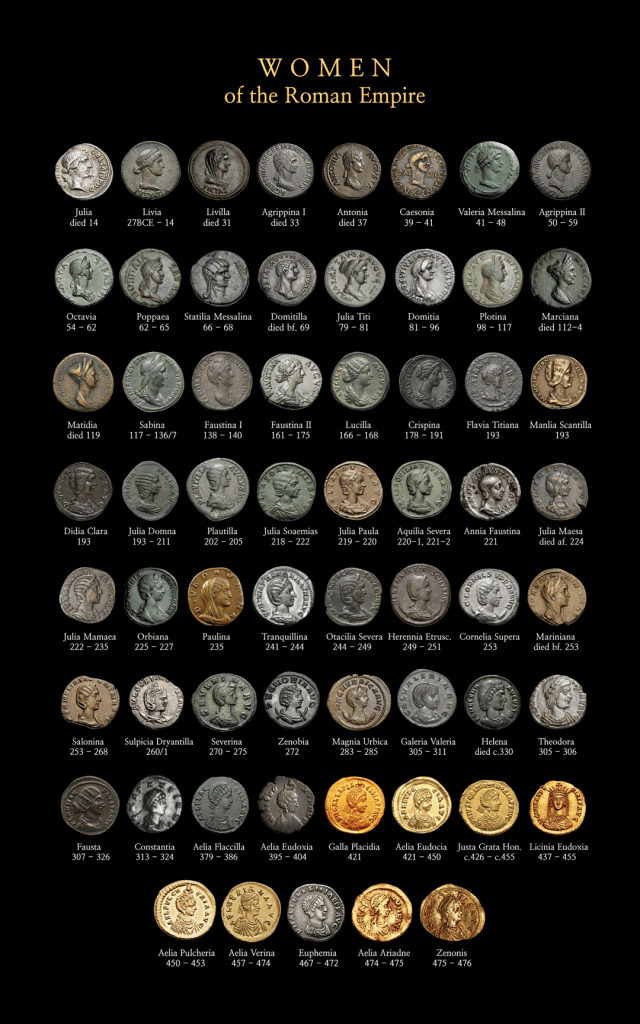
𝗕𝗲𝘀𝘄𝗶𝗰𝗸, 𝗕𝗲𝘃𝗲𝗿𝗹𝗲𝘆 from the Yorkshire Archaeological & Historical Society
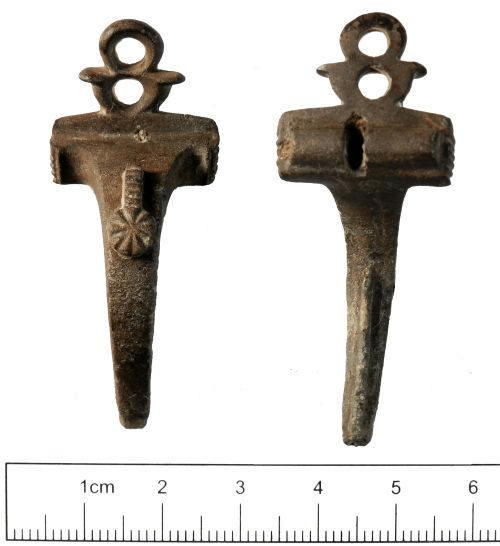
A very nice Roman headstud brooch (YORYM-F902B4), missing only its pin and axis bar. It is quite small – just 52.5 mm long… This kind of brooch is found throughout Roman Britain but is concentrated in Lincolnshire and Yorkshire, particularly around Castleford, where they are known to have been made. They date to the late first and second centuries.

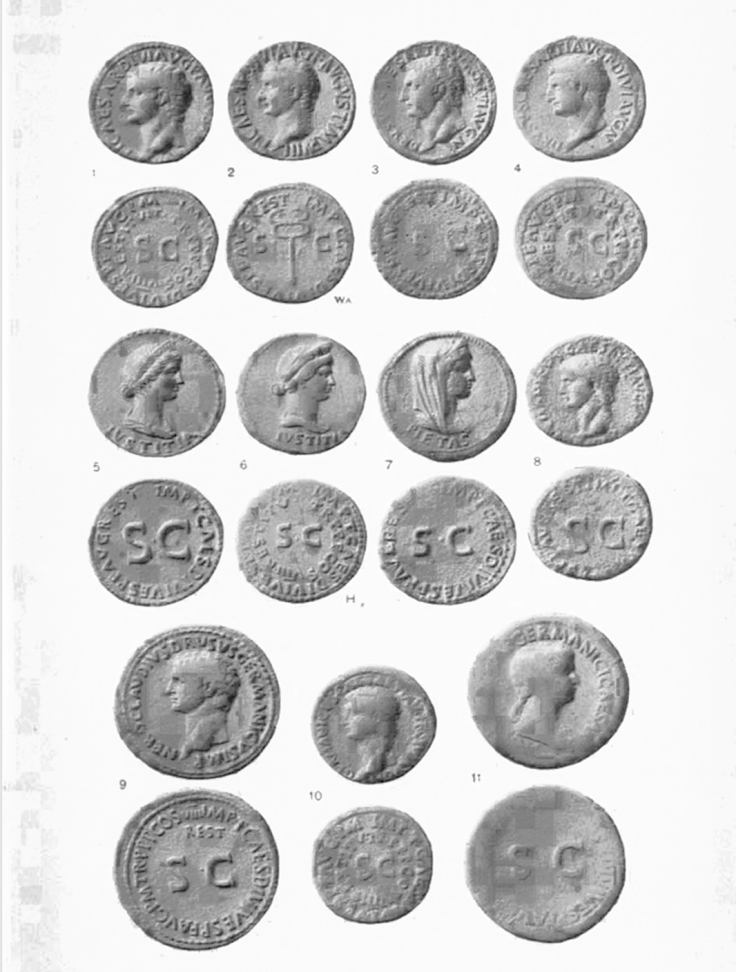
A must-have look if you are into Roman Coins…
With this introduction to our Roman Coin website, i hope to be able to show you how we are doing it differently, as within this site you will find most coins associated with the Romans, with the rarer ones being added when a positive ID has been made & we can get a reasonable photograph…

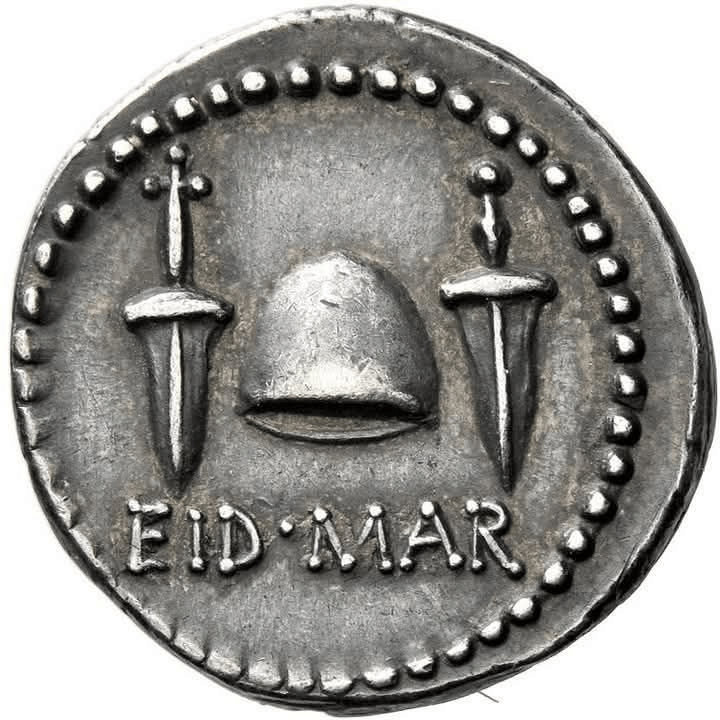
The designs on the reverse of Roman coins are worth noting individually, in minute detail, I have chosen a subject that should be common knowledge as an example, the reverse on this coin testifies to the murder of Caesar, with the date of the event, it shows two daggers as the instruments of death, and by displaying the pileus, or freedman’s cap, which symbolises the professed goal of the assassins’ work. Though dozens of men were involved in the plot against Caesar, all are represented by only two daggers – a clear allusion to Brutus and Cassius as leaders of the coup and, subsequently, of the armed opposition to Antony and Octavian. The portrait is also of great interest and importance. The only securely identifiable portraits of Brutus occur on coins naming him imperator: the Eid Mar denarii of Plaetorius Cestianus and the aurei of Servilius Casca and Pedanius Costa. Indeed, all other portraits on coins or other media are identified based upon these three issues.
S. Nodelman has made a careful study of the Eid Mar series from the art-historical view, and H. A. Cahn has similarly done so from the numismatic perspective. The former has divided Brutus inscribed coin portraits into three main categories: a ‘baroque style portrait on the aurei of Casca, a ‘neoclassical style on the aurei of Costa, and a ‘realistic style on the Eid Mar denarii of Cestianus. Nodelman describes the Eid Mar portraits as “the soberest and most precise” of all, and he divides them into two distinct categories, ‘plastic and linear’, suggesting both were derived from the same sculptural prototype…
Roman Keys…

As with all progressive nations and the need to improve things, the Romans soon found a way to move away from wooden cylinder locks to the more robust metal versions, with the introduction of metal springs in the mechanism…


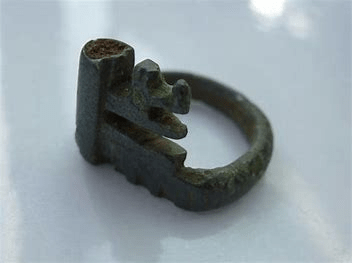
Roman “finger rings” were also used as keys, although on a smaller scale than the front door keys. These were used for smaller personal caskets, drawers, chests, and cabinets, etc.
These little finger rings used as “key rings” can also be found in gold and silver…
Coins to look out for as they represent a turbulent time in Roman History…
It started in the year 193 AD, which is known as the “Year of the Five Emperors.” A year of political chaos, during which five different individuals held the title of Roman Emperor in quick succession. These emperors were:
1… “Pertinax” (January 1, 193 – March 28, 193): After the assassination of Commodus, Pertinax, the then-Praetorian Prefect, ascended to the throne. However, his reign was short-lived, as he was assassinated by the Praetorian Guard.
2… “Didius Julianus” (March 28, 193 – June 1, 193): Didius Julianus became emperor after buying the throne from the Praetorian Guard, who had auctioned it off following the assassination of Pertinax. His rule was also brief, as he was overthrown and executed.
3… “Septimius Severus” (April 14, 193 – February 4, 211): Coming to power after a civil war, Severus established the Severen dynasty. He was a strong military leader and managed to stabilize the empire after the tumultuous events of 193 AD.
4… “Pescennius Niger” (April 193 – 194): Initially recognized as emperor in the eastern provinces, Pescennius Niger was a rival claimant against Septimius Severus. He was defeated and killed in battle in 194 AD.
5… “Clodius Albinus” (193 – 197): Another rival to Septimius Severus, Albinus initially allied with Severus against Niger but later declared himself emperor. He was defeated by Severus at the Battle of Lugdunum in 197 AD.
The year 193 AD marked a significant period of instability and civil war in the Roman Empire, which ended with Septimius Severus establishing a new imperial dynasty.

One of the most puzzling Roman artifacts is the dodecahedron. These small, hollow copper-alloy objects from the 2nd to 4th centuries AD feature twelve pentagonal faces, each with a circular hole of varying size. Found in places like Austria, France, and the UK, their true purpose remains a mystery.
The first was discovered in 1739, and since then, over 130 have been unearthed—none in Italy. They show little wear, lack inscriptions, and theories about their use range from surveying tools and knitting aids to religious items or fortune-telling devices. Recently, a well-preserved example was uncovered in Norton Disney, UK, bringing the number found in Roman Britain to 33, keeping historians and archaeologists guessing.


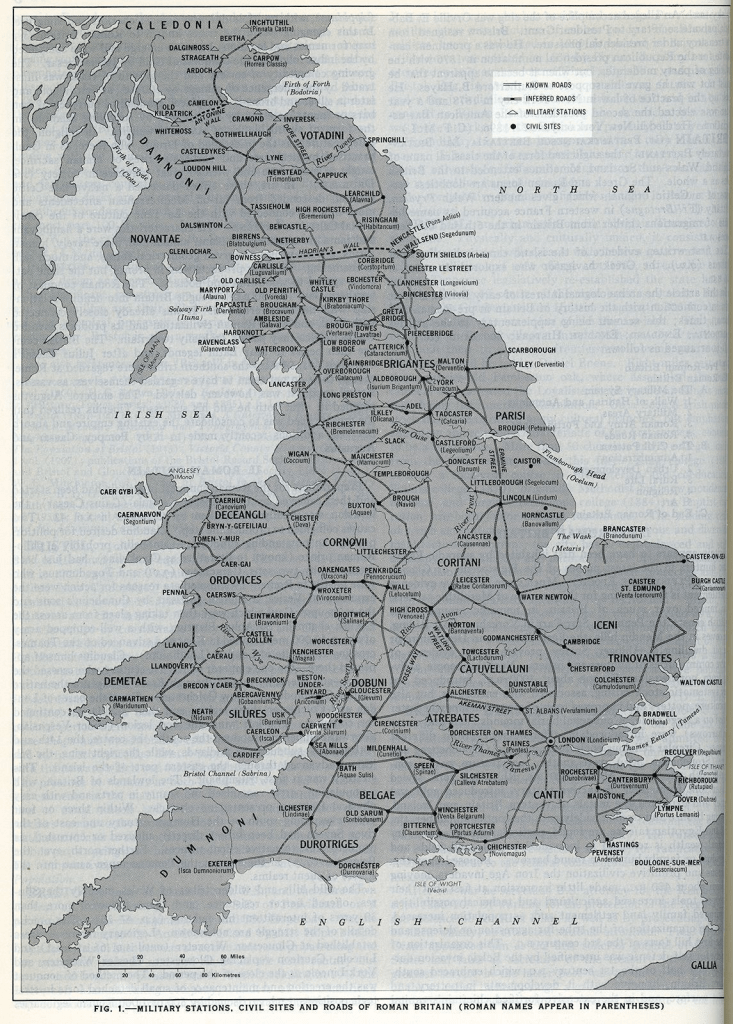
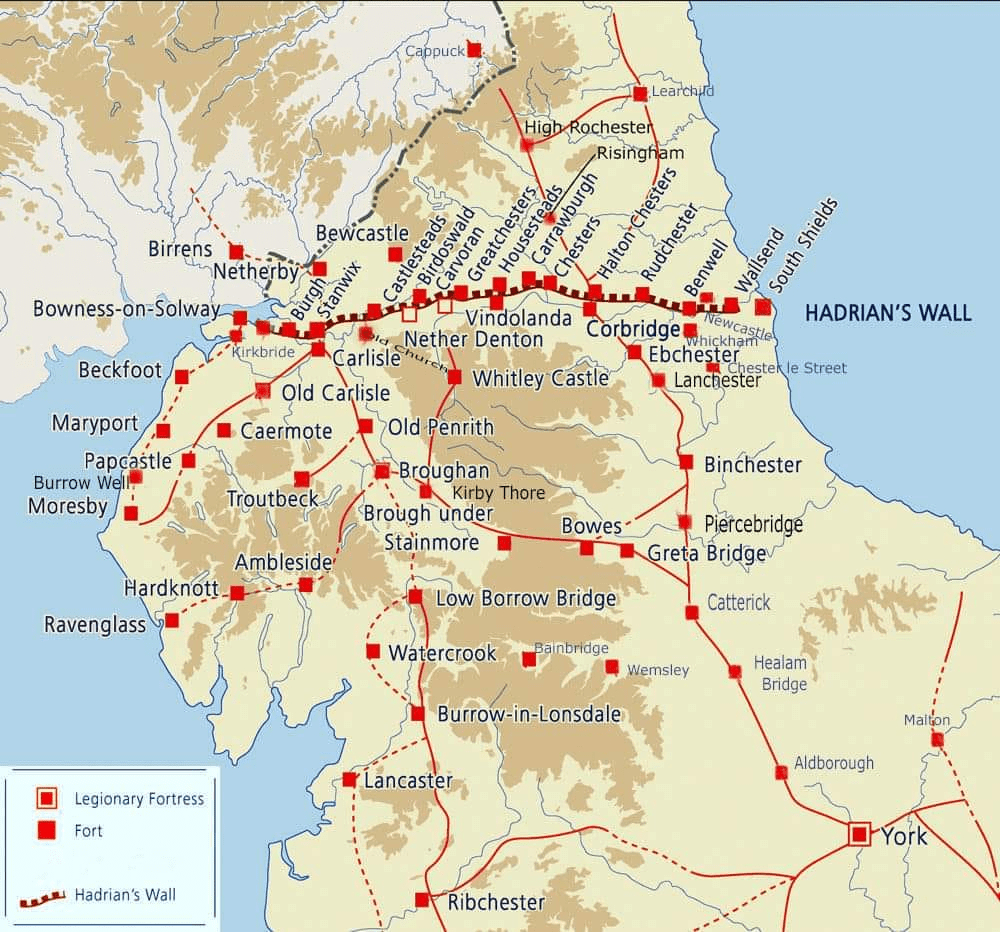
Roman forts continue to dot our countryside.

The identification of these coins will come later…
Roman Forts around the North England
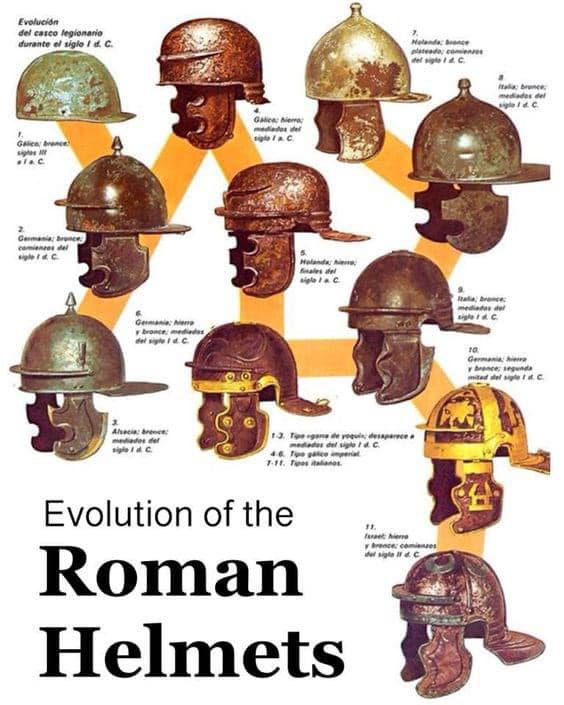
On this page, you will find all sorts of odd Roman bits and pieces…

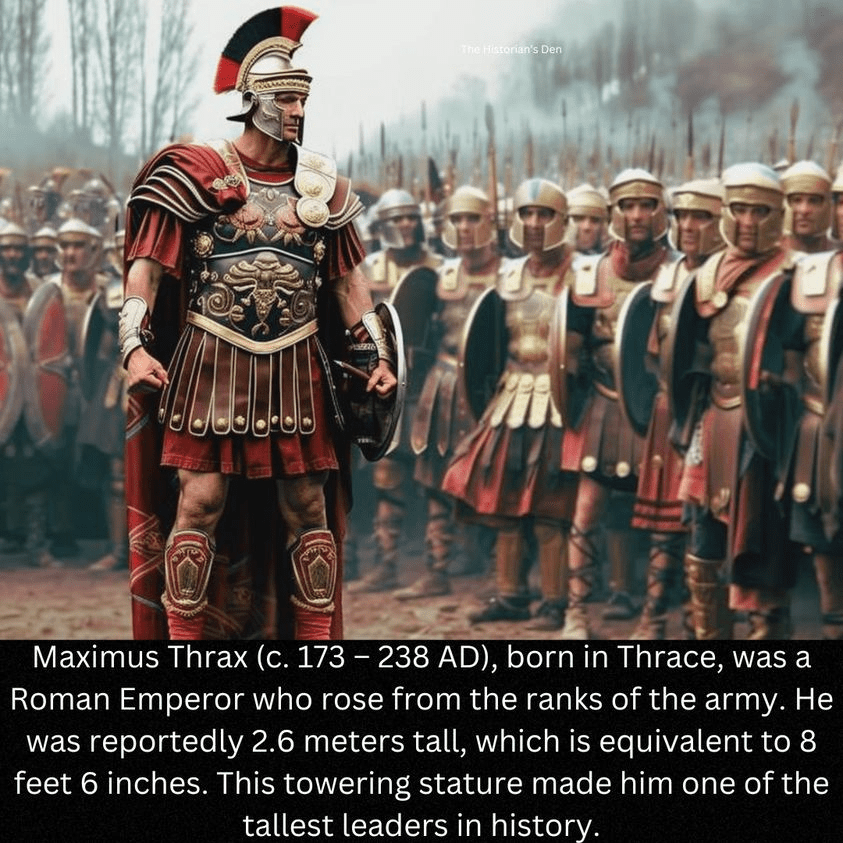

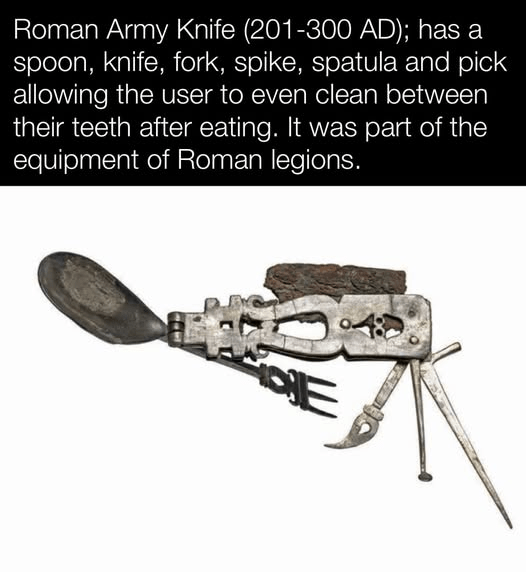
This Roman Army Knife…
which was used between 201-300 AD, was a multi-tool carried by Roman legionaries, featuring a spoon, knife, fork, spike, spatula, and pick for eating and dental hygiene. Crafted from iron or bronze, this compact implement, predating the modern Swiss Army Knife by over 1,600 years, reflects Roman engineering ingenuity and the legionaries’ need for portable, multifunctional equipment during military campaigns. Found across the Roman Empire, such as the specimen at the Fitzwilliam Museum, it highlights the emphasis on discipline and self-sufficiency, especially during the Crisis of the Third Century (235-284 AD), a period of instability when legions relied on such tools for daily survival amidst constant movement and logistical challenges.
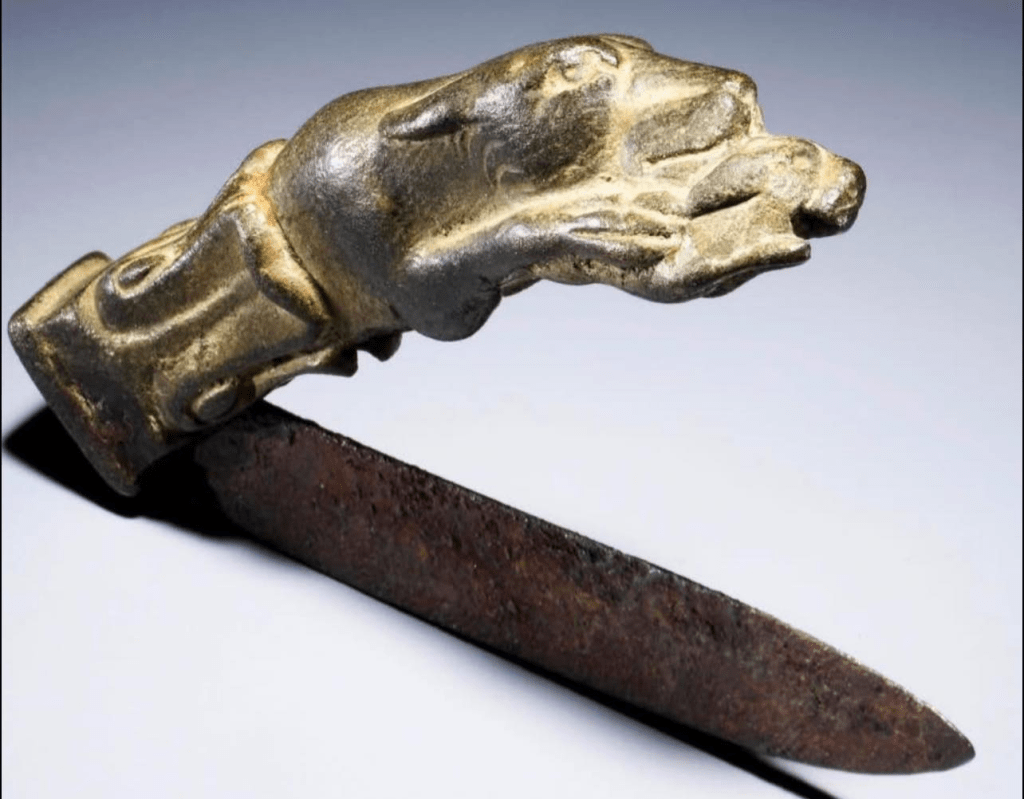
Roman knife…


 udigidig.com